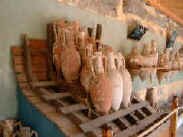
 Early Centuries in Bodrum Region
Caria region was first inhabited by the Lelegs and Carians, indigenous populations, as early as 3000 BC. More than 20 ancient cities, inhabited by Carians and Lelegs, still bear witness to glorious past of the region. The region which took its name from Carians witnessed the arrival of warlike Dorians originating from Greece nearly 1000 years BC. Dorians who occupied only coastal zone got mixed with the local populations.
Persian Period
In 6th century BC Persians as part of their occupation policy of Anatolia attacked to Caria. They defeated Carian army near Cine River and advanced towards the heart of Caria. Persians who divided these occupied regions into satrapies and appointed governors to rule those areas didn't want to impose their religions and culture over the local populations. The Persians crossed Bosphorus and Dardanelles and even occupied Athenian Acropolis.
Queen Artemisia
Artemisia, the queen of Caria was among those who helped the Persian king during his campaign during the capture of Athens. Also Salamis Sea Battle where Persian and Athenian fleets had a war, Artemisia was commanding 5 ships representing Halicarnasos, Cos and other ancient cities in the region. Though she tried to persuade Persian King not to have sea battle with Greeks, the king followed the decision of the majority. Artemisia fought gallantly and earned the praising words of the king:
"My men fought like women and my women fought like men"
King Mausolos
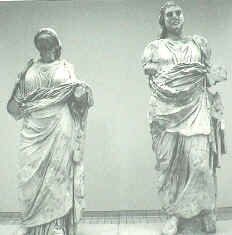
After several rulers, in 377 BC, King Mausolos started ruling Caria. His reign was Golden Age of Caria. King Mausolos moved the capital from Mylasa to Halicarnasos during the 10th year of his reign. He embellished his new capital with very attractive buildings. He had city walls and theatre built and laid the foundations of his monumental tomb. when King Mousalos died, his sister wife ruled Caria.
Artemisia II, Carian Queen
Most important mission of Artemisia was to finish monumental her husbands tomb which was later ranked as one of the seven wonders of the world. Artemisia who rule only two years also proved that she was wise and a fearless leader. When Rhodians attracted Halicarnasus, she ordered that the city showed no resistance at the beginning. But using her army and ships hiding in the inner harbor, she captured all the Rhodian fleet. Rhodians realizing they had no ships left, they surrendered. Artemisia applied a very clever stratagem, using Rhodian ships and clothes of captured Rhodian soldiers, she attracted the island of Rhodos and captured the city. She further erected a monument to commemorate this double victory and took measures to protect the monument in the future. After her death, Halicarnasusu and Caria was ruled by Idrius and Ada who was exiled by her younger brother, Pixodoras to city of Alinda. Pixodoras ruled under heavy Persian influence, He made his daughter to get married with a Persian Noble and he also left his throne to him. In 334 BC, Halicarnasus witnessed the arrival of Alexander the Great who tried to capture the city which was well defended by the Persians and Carians.
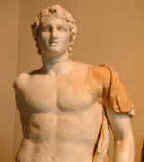
Alexander The Great, Siege of Halicarnassus
Eventually, Alexander's army captured the city and following the order of their king, they destroyed whole city except the monumental tomb of king Mausolos. Ada, former queen of Caria regained power and became the queen of Caria.
The city which was destroyed during the siege of Alexander the Great never returned to its former glory. It also suffered during the wars between the generals of Alexander the Great after Alexander's death. The region first fell into hands of Selevkos and passed to Egyptian rule.
Carian Princess Ada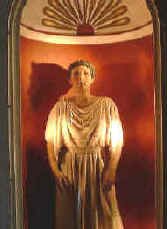
Exiled queen Ada who had been trying to return her throne met Alexander the Great and ask for his help. Alexander, who was accustomed to see cities and people surrendering without any condition up to this point, had a strong resistance at Halicarnasus. The city had strong wall and mods filled with the water. The siege lasted 3 months during when Carians and Persians came of the city and attacked to Alexander's army. But this attacks ended at a disastrous way and many soldiers were killed by Macedonians.
Roman Period in Caria
In 129 BC BC, Caria region became totally under the Roman rule. During first Century BC. Roman writer Vitrivius visited the city and described Halicarnasus in full detail giving information about the city and its monuments. The city was looted by Roman Verres in 80 BC.
Byzantine Period in Caria
During the Byzantine Empire Caria region became an Episcopal center. Capital city was Aprodisias which had control over 25 bishopric centers in Caria. During the Byzantine period many former pagan temples were converted into churches.
Arabic Armies during the time of Muaviye attacked Bodrum and destroyed the city in 654 BC.
Seljuk Turks in Bodrum
After the Manzikert Battle where Seljuk Turks defeated the Byzantine armies, Turkish armies occupied Anatolia . Bodrum was also captured during this time. Although the area was re captured during the first Crusade, Mentese Bey leading the Turkish army established order in the region and chose Milas and Peçin as the center of his Beylik.
Ottoman Turks in Bodrum
Knight of Rhodes understanding the importance of Halicarnasos, they rebuilt an immense fortress there. During the construction they even used the stones of the Mausolum as the construction material. Halicarnasus stayed under the rule of Knights of Rhodes till the campaign of Suleyman the magnificent who took the control of the region after the capture of Rhodes.
During the 16th century, a native of Caria Region, Turgut Reis raised to one of the highest ranks in the Ottoman Navy and became one of the captains of Barbarossa. His fame as Dragut spread all over the Mediterranean world.
Bodrum was important port and ship building place during the Ottoman centuries. Evliya Celebi, Turkish traveller and historian mentioned the shipyards and ship building his book. He visited Bodrum in 1671. From historical records, we know Bodrum gave great captains and seamen for the Ottoman Navy and many ships were built at Bodrum shipyards. During the 17th and 18th centuries, Bodrum was an important harbor for Mediterranean Trade. But due to British and French extension and colonization, Ottoman superiority at the Mediterranean gradually disappeared.
