|
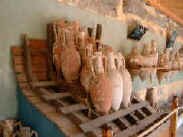 Bodrum Museum has wonderful display of amphora park where visitors enjoy different shapes and different forms used by different manufacturers. The name of the amphora was formed form two Greek words: anfi, meaning two-sided and phora meaning transportable. Men trying to find new forms and means for storing and transporting wine, olive oil, olives, wheat barley created these amphorae. According to type of the cargo, these amphorae had isolation with resin, gum or wax. Used great numbers, amphorae were especially produced at great trade or wine producing centres and these were easily identifiable because of their shapes and forms. Bodrum Museum has wonderful display of amphora park where visitors enjoy different shapes and different forms used by different manufacturers. The name of the amphora was formed form two Greek words: anfi, meaning two-sided and phora meaning transportable. Men trying to find new forms and means for storing and transporting wine, olive oil, olives, wheat barley created these amphorae. According to type of the cargo, these amphorae had isolation with resin, gum or wax. Used great numbers, amphorae were especially produced at great trade or wine producing centres and these were easily identifiable because of their shapes and forms.  Their forms with pointed ends enabled people to store hundreds of them together or to carry those easily. People put straw, bushes to protect the ships hull and also prevent the breakage of those amphorae. Their mouths were shut with terra cotta or with quarks. The stamps on the hands of amphorae revealed us the names of the manufacturers and the guaranty of the city or city state. Knidians used bull head as their symbol. As to Coans, their symbol was crab, while Rhodians used Rose as their symbol. Their forms with pointed ends enabled people to store hundreds of them together or to carry those easily. People put straw, bushes to protect the ships hull and also prevent the breakage of those amphorae. Their mouths were shut with terra cotta or with quarks. The stamps on the hands of amphorae revealed us the names of the manufacturers and the guaranty of the city or city state. Knidians used bull head as their symbol. As to Coans, their symbol was crab, while Rhodians used Rose as their symbol.
Amphoras has been greatest help for archaeologist to locate the site of ancient shipwrecks. Since the hull, wooden part if the ship disappeared, amphorae were only objects survived and became pointers for the ancient ships. This feature also attracted attention of divers and sponge divers all these years and many of these amhoras plundered or decorated the fish restaurant of the region.
|
